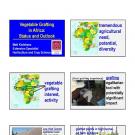
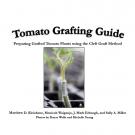
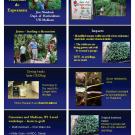
Vegetable grafting is increasingly adopted worldwide to reduce the risk of soilborne diseases and can offer an entrepreneurial opportunity for skilled nursery farmers. Grafting begins with two types of seedlings that are cut and then physically joined together to grow into one plant: the scion, the part of the plant above the ground; and the rootstock, which is generally chosen for its ability to resist soilborne diseases.