Inclusive Agricultural Growth Projects

This website has been archived and is no longer maintained.

This website has been archived and is no longer maintained. Older content or site functionality may not be accessible or functional in newer browsers. If you require accessible documents, please contact the Department of Plant Sciences for further information.

Inclusive Agricultural Growth

Growth in the agriculture sector has been shown in some areas to be more effective than growth in other sectors at lifting people out of poverty — increasing food availability, generating income from production, creating employment and entrepreneurship opportunities throughout value chains, and spurring growth in rural and urban economies. Fruit and vegetable production and markets have a big impact, as these crops generate high economic returns per unit of land. Farmers who grow high-value horticulture crops consistently earn more than those who grow other commodities, allowing smallholder farmers to derive additional income and driving agricultural and economic diversification. Innovation in horticulture crops, including postharvest entrepreneurial opportunities, offer increased production, value-added income, and long-term investment opportunities.
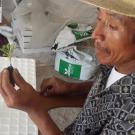
Developing a postharvest alternative to fungicide in Sri Lanka

Led by Robert Paull,

This project brings together two parallel research programs for collaboration — one in Sri Lanka using natural coating and herbal extracts and another in Hawaii to use natural epiphytic microo

Sri Lanka

Empowering women through horticulture in Honduras

Led by Janelle Larson,

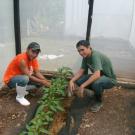
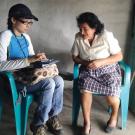
In the Western Highlands of Honduras, families struggle to survive on subsistence agriculture. Poverty and malnutrition rates are high, and take a particularly heavy toll on women and children.

Honduras

Implementing drying beads for seeds in Asia and Africa

Led by Kent Bradford,

Improving the ability of smallholder farmers to access high-quality seeds of improved varieties of horticultural crops is fundamental to increasing farmer productivity and incomes.

Nepal, Bangladesh, Kenya, Tanzania, Uganda, Rwanda

Improving marketing capacity for specialty crops in Ghana

Led by James Simon,

This project expands economic opportunities for small-scale farmers in Ghana by enhancing their productivity and deepening market access and participation.

Ghana

Improving practices for dried apricots in Tajikistan

Led by Ariana Torres,

Apricots have the potential to be a high-value crop for smallholder farmers in Tajikistan as the climate, soil, and water in many parts of the country are favorable for apricot production.

Tajikistan

Improving tomato production through local GAPs in Nigeria

Led by Sally Miller,

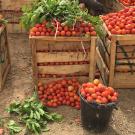
This project enhances regional and international trade in Nigerian tomatoes by developing a science-based good agricultural practices (GAPs) curriculum and training programs to improve production,

Nigeria

Managing nematodes and soil health in Guatemala

Led by Brent Sipes,
This research team works with smallholder potato farmers in the Western Highlands of Guatemala on integrated technologies for nematode and soil health management, so potato farmers can achieve sustainable yields.
Guatemala

Scaling up seed-drying technology in Bangladesh

Led by Johan Van Asbrouck,

Providing smallholder farmers access to high-quality seeds of improved varieties of horticultural crops is fundamental to increasing productivity and incomes.

Bangladesh