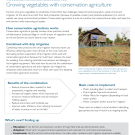
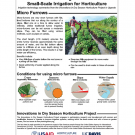
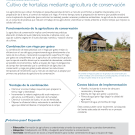
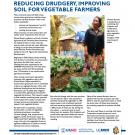
More commonly used with field crops, conservation agriculture combines three practices that help farmers invest in soil health, specifically: minimal soil disturbance (“no tilling), continuous mulch cover, and rotating diverse crops. These practices can improve soil health and reduce water evaporation from the soil.
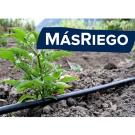
Combining these practices with drip irrigation improves water use efficiency, delivering water more directly to the crop roots and decreasing surface evaporation. Our field trials have found that the combination of conservation agriculture and drip irrigation can mitigate the temporary yield reductions which are often seen upon first adopting conservation agriculture practices.